
Survey of the Visual Arts: Bringing art into the home with stained glass
January 4, 2025
The mention of stained glass often brings to mind Louis Comfort Tiffany and his magnificent windows.
The late 19th and early 20th centuries saw a wave of German, Austrian and Swiss immigrants settle in what is now German Village, some of whom installed stained-glass windows made by local artisans to bring visual art into the home.
Ludwig and Theodore von Gerichten immigrated with their father to the U.S. in 1887. Ludwig studied the making of stained glass in Cincinnati and they operated an art glass company in Alabama with Theodore as the accountant before settling in Columbus.
After living for a time on Kossuth Street, the brothers lived above their first Von Gerichten Art Glass Studio on South High Street, near Beck Steet.
When business took off, they both bought homes. Ludwig lived at 181 Thurman Ave. and Theodore resided at 117 E. Deshler Ave.
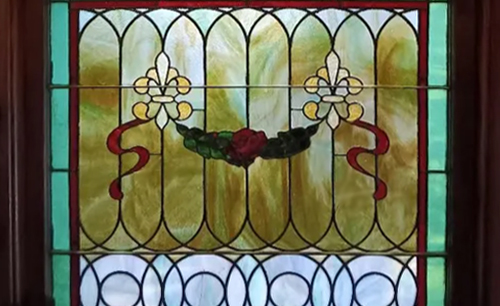
Theodore adorned his home with some of the magnificent work done in their studio, which can still be seen in the front door of the home today. The idea of beautifying stately homes with stained-glass windows caught on in the area. Many of the older homes in German Village and Merion Village still have the original stained-glass windows in stairwells, as in this windows.
Appreciating the many unique features of German Village homes led me into a career in real estate; stained-glass windows are high on my list of these fine features, along with pocket doors and carved mantles.
Those who could not afford picturesque stained glass would have smaller windows with a wash pattern installed. Some glass artists came from Germany to work for the von Gerichten brothers in Columbus and the von Gerichtens opened a second studio in Munich. Their businesses prospered and their work won awards in the 1904 St. Louis World’s Fair.
According to the Stained Glass Association of America (SGAA), founded in part by Ludwig von Gerichten in 1906, stained glass refers to any colored glass. A legend handed down by Pliny suggests that Phoenician sailors discovered glass by heating a pot over sand which cooled into glass. The SGAA states, “It is more likely that Egyptian or Mesopotamian potters accidentally discovered glass when firing their vessels.”
They first fashioned glass beads with a clay core between 2750 and 2625 B.C. The Romans began glazing glass into windows in the first century A.D.
The earliest example of stained glass installed in a church was in St. Paul’s Monastery founded in 686 in Jarrow, England. Fragments of glass bearing an image of Christ dating from 540 A.D. were unearthed in Ravenna, Italy in 1930.
Stained glass depicting figures from the Bible made its way into churches in France and other parts of Europe. England is renowned for its ancient stained glass in cathedrals — the magnificent windows in Canterbury Cathedral imported from France date back to the 11th century.
In Germany, the stained-glass Prophet Windows in Augsburg Cathedral also date back to the 11th century. The von Gerichtens’ studio created over 2,000 stained-glass windows for churches, including Trinity Lutheran Church, and many for home installation before tragedy struck: Ludwig’s wife and son died, followed by the death of Theodore’s young son.
Then came World War I and the Great Depression, causing the demand for stained glass to plummet. The brothers parted ways in 1931, with Theodore running the business for a few more years and Ludwig opening a studio on Mount Vernon Avenue. A new era in stained glass in German Village was about to begin.
Elmore Helf, the son of Henry Helf, the von Gerichtens’ shop foreman, started a glass art company in 1924. In time, Elmore acquired much of the von Gerichtens’ equipment and founded Franklin Art Glass Studios, which stands today at 222 E. Sycamore St.
Franklin Art Glass serves residential customers, businesses and houses of worship. One of its most notable business clients was Dave Thomas, founder of Wendy’s, who ordered 45,000 stained-glass lampshades for his restaurants.
Another client was the German Village-based Max and Erma’s restaurant. One of the elements of Franklin Art Glass Studio’s longevity is offering supplies and classes to those interested in creating their own stained-glass pieces. They also have a retail store in which customers can select pieces to decorate their homes.
New homes builders, especially on the West Coast, are seeing a resurgence of demand for stained-glass windows. A perusal of architectural magazines, blogs and websites show examples of the new, often abstract, designs being installed today. The designs may have changed, but beautifully designed windows are still a treasure.
The late 19th and early 20th centuries saw a wave of German, Austrian and Swiss immigrants settle in what is now German Village, some of whom installed stained-glass windows made by local artisans to bring visual art into the home.
Ludwig and Theodore von Gerichten immigrated with their father to the U.S. in 1887. Ludwig studied the making of stained glass in Cincinnati and they operated an art glass company in Alabama with Theodore as the accountant before settling in Columbus.
After living for a time on Kossuth Street, the brothers lived above their first Von Gerichten Art Glass Studio on South High Street, near Beck Steet.
When business took off, they both bought homes. Ludwig lived at 181 Thurman Ave. and Theodore resided at 117 E. Deshler Ave.
Theodore adorned his home with some of the magnificent work done in their studio, which can still be seen in the front door of the home today. The idea of beautifying stately homes with stained-glass windows caught on in the area. Many of the older homes in German Village and Merion Village still have the original stained-glass windows in stairwells, as in this windows.
Appreciating the many unique features of German Village homes led me into a career in real estate; stained-glass windows are high on my list of these fine features, along with pocket doors and carved mantles.
Those who could not afford picturesque stained glass would have smaller windows with a wash pattern installed. Some glass artists came from Germany to work for the von Gerichten brothers in Columbus and the von Gerichtens opened a second studio in Munich. Their businesses prospered and their work won awards in the 1904 St. Louis World’s Fair.
According to the Stained Glass Association of America (SGAA), founded in part by Ludwig von Gerichten in 1906, stained glass refers to any colored glass. A legend handed down by Pliny suggests that Phoenician sailors discovered glass by heating a pot over sand which cooled into glass. The SGAA states, “It is more likely that Egyptian or Mesopotamian potters accidentally discovered glass when firing their vessels.”
They first fashioned glass beads with a clay core between 2750 and 2625 B.C. The Romans began glazing glass into windows in the first century A.D.
The earliest example of stained glass installed in a church was in St. Paul’s Monastery founded in 686 in Jarrow, England. Fragments of glass bearing an image of Christ dating from 540 A.D. were unearthed in Ravenna, Italy in 1930.
Stained glass depicting figures from the Bible made its way into churches in France and other parts of Europe. England is renowned for its ancient stained glass in cathedrals — the magnificent windows in Canterbury Cathedral imported from France date back to the 11th century.
In Germany, the stained-glass Prophet Windows in Augsburg Cathedral also date back to the 11th century. The von Gerichtens’ studio created over 2,000 stained-glass windows for churches, including Trinity Lutheran Church, and many for home installation before tragedy struck: Ludwig’s wife and son died, followed by the death of Theodore’s young son.
Then came World War I and the Great Depression, causing the demand for stained glass to plummet. The brothers parted ways in 1931, with Theodore running the business for a few more years and Ludwig opening a studio on Mount Vernon Avenue. A new era in stained glass in German Village was about to begin.
Elmore Helf, the son of Henry Helf, the von Gerichtens’ shop foreman, started a glass art company in 1924. In time, Elmore acquired much of the von Gerichtens’ equipment and founded Franklin Art Glass Studios, which stands today at 222 E. Sycamore St.
Franklin Art Glass serves residential customers, businesses and houses of worship. One of its most notable business clients was Dave Thomas, founder of Wendy’s, who ordered 45,000 stained-glass lampshades for his restaurants.
Another client was the German Village-based Max and Erma’s restaurant. One of the elements of Franklin Art Glass Studio’s longevity is offering supplies and classes to those interested in creating their own stained-glass pieces. They also have a retail store in which customers can select pieces to decorate their homes.
New homes builders, especially on the West Coast, are seeing a resurgence of demand for stained-glass windows. A perusal of architectural magazines, blogs and websites show examples of the new, often abstract, designs being installed today. The designs may have changed, but beautifully designed windows are still a treasure.